

Sharpen with a specific goal
Tell the model whether the eyes, fur, architecture or product edges should receive attention.
Prompt Guide
Model
Reference Image
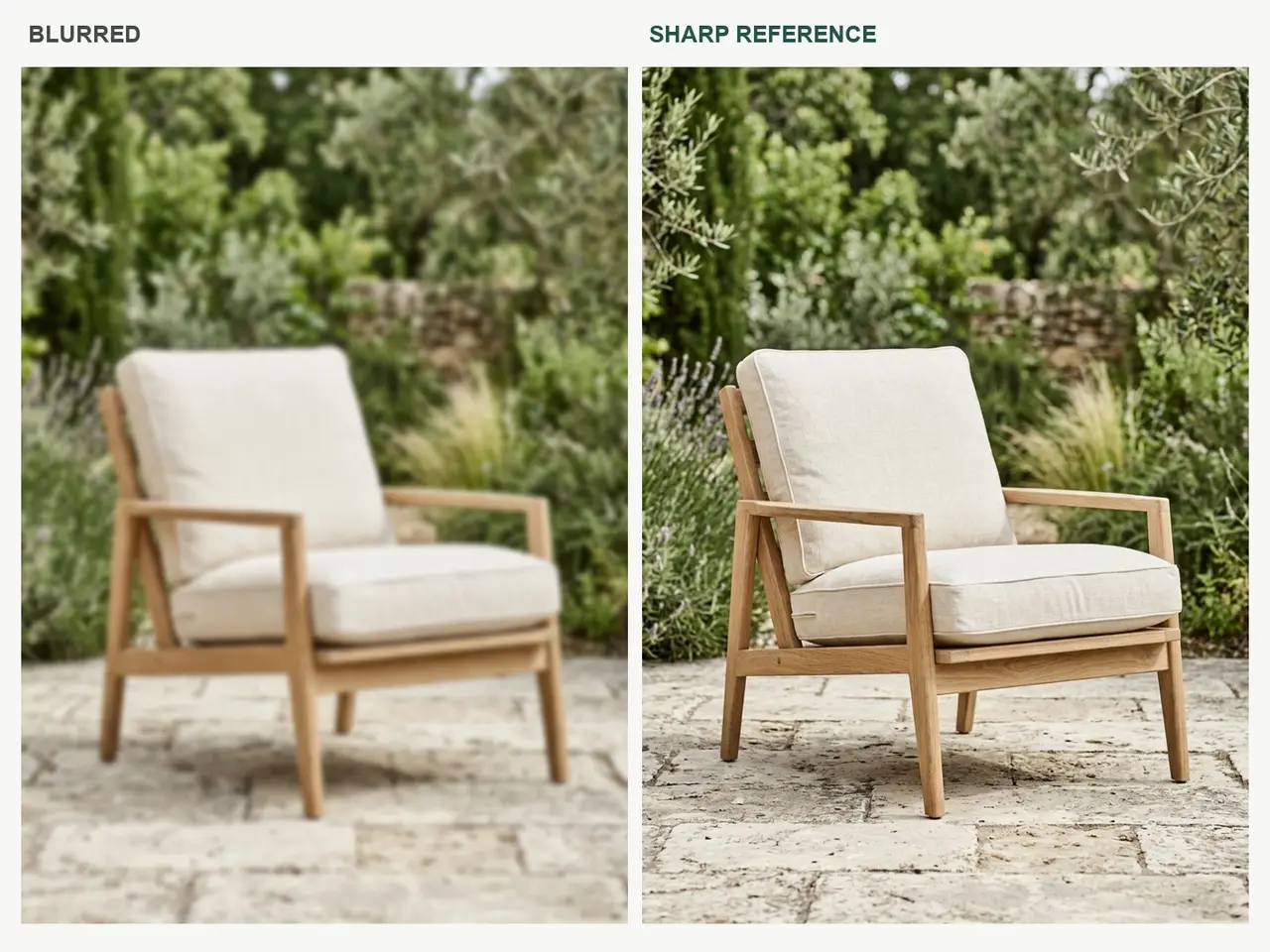
Give a soft portrait, travel shot or product photo a clearer visual direction. Request restrained sharpening and natural texture, then compare the result with the original so added detail does not become a different face or object.
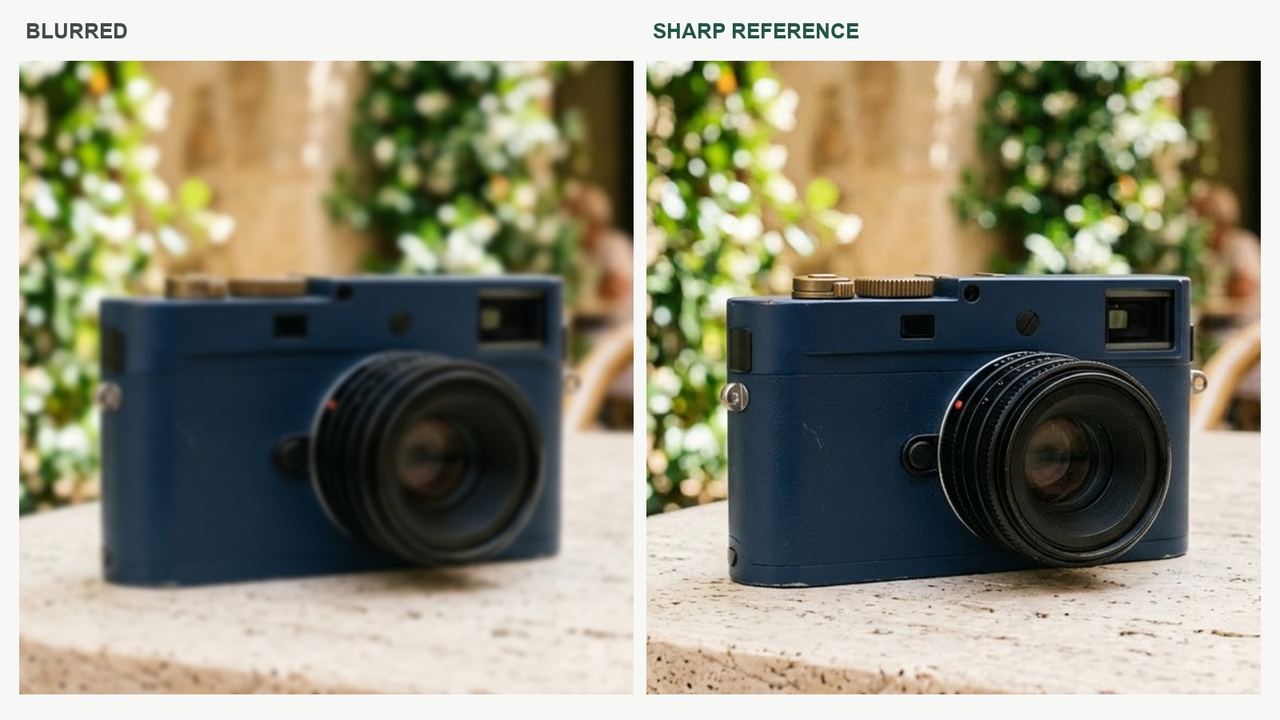
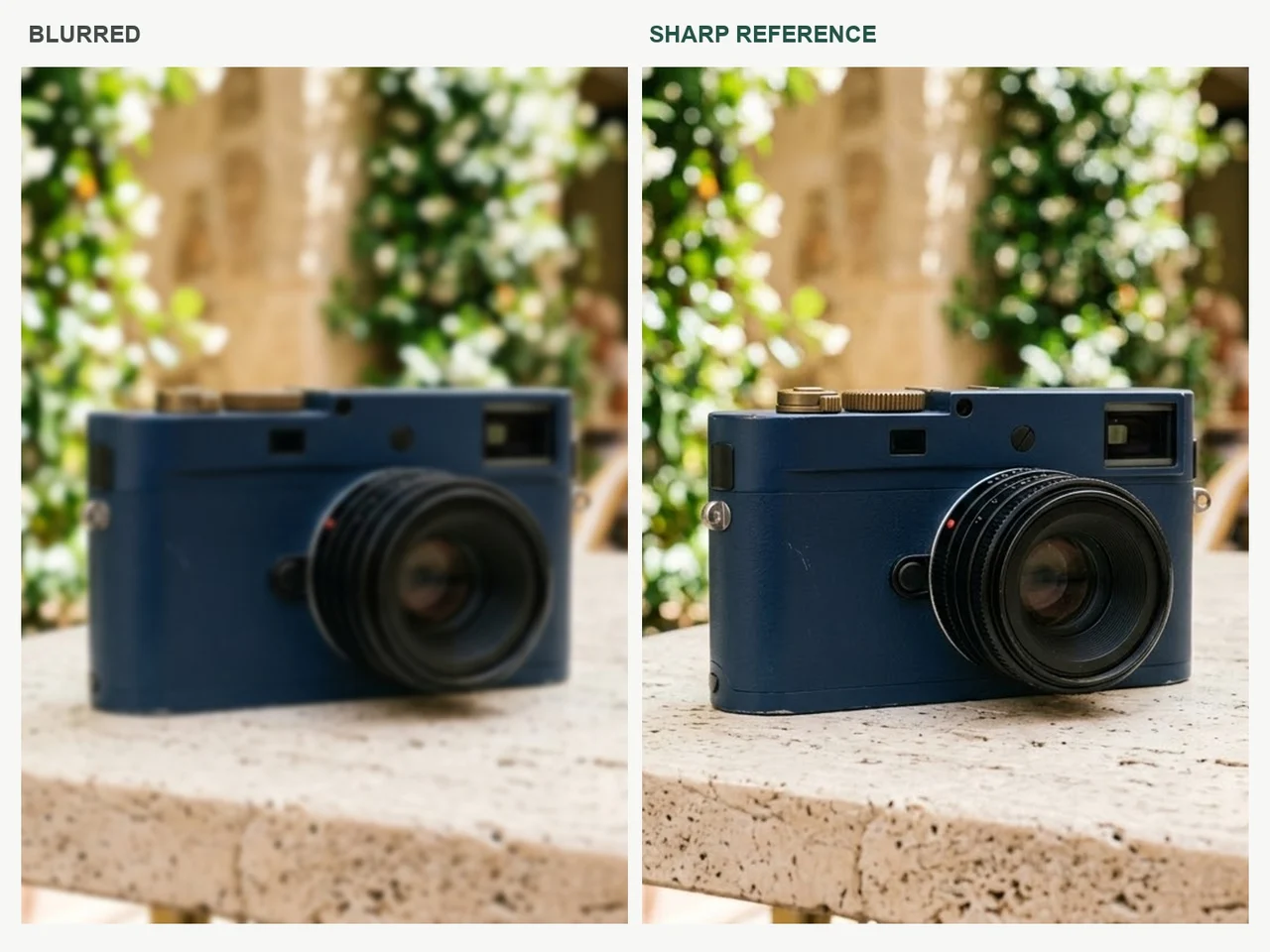
Same-image clarity illustrations. The blurred side is simulated and the sharp side is the clean reference, not a measured recovery test of this workspace.
 Products
Improve the clarity of my blurred reference photo while preserving the same person or object, composition and colors. Avoid invented facial details, excessive sharpening and waxy smoothing. Inspect the result against the source.
Use a Related Prompt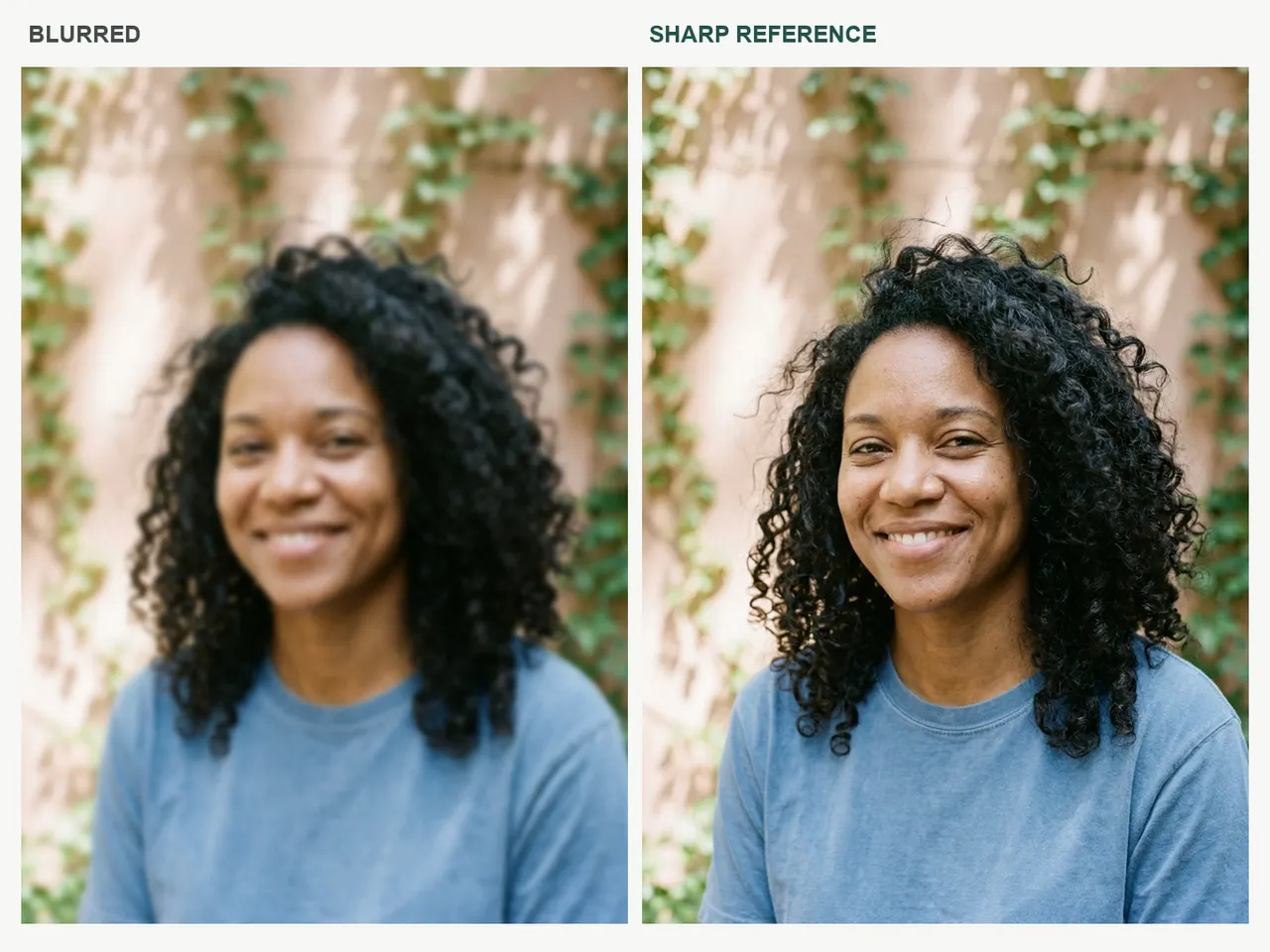 Portraits
Improve the clarity of my blurred reference photo while preserving the same person or object, composition and colors. Avoid invented facial details, excessive sharpening and waxy smoothing. Inspect the result against the source.
Use a Related Prompt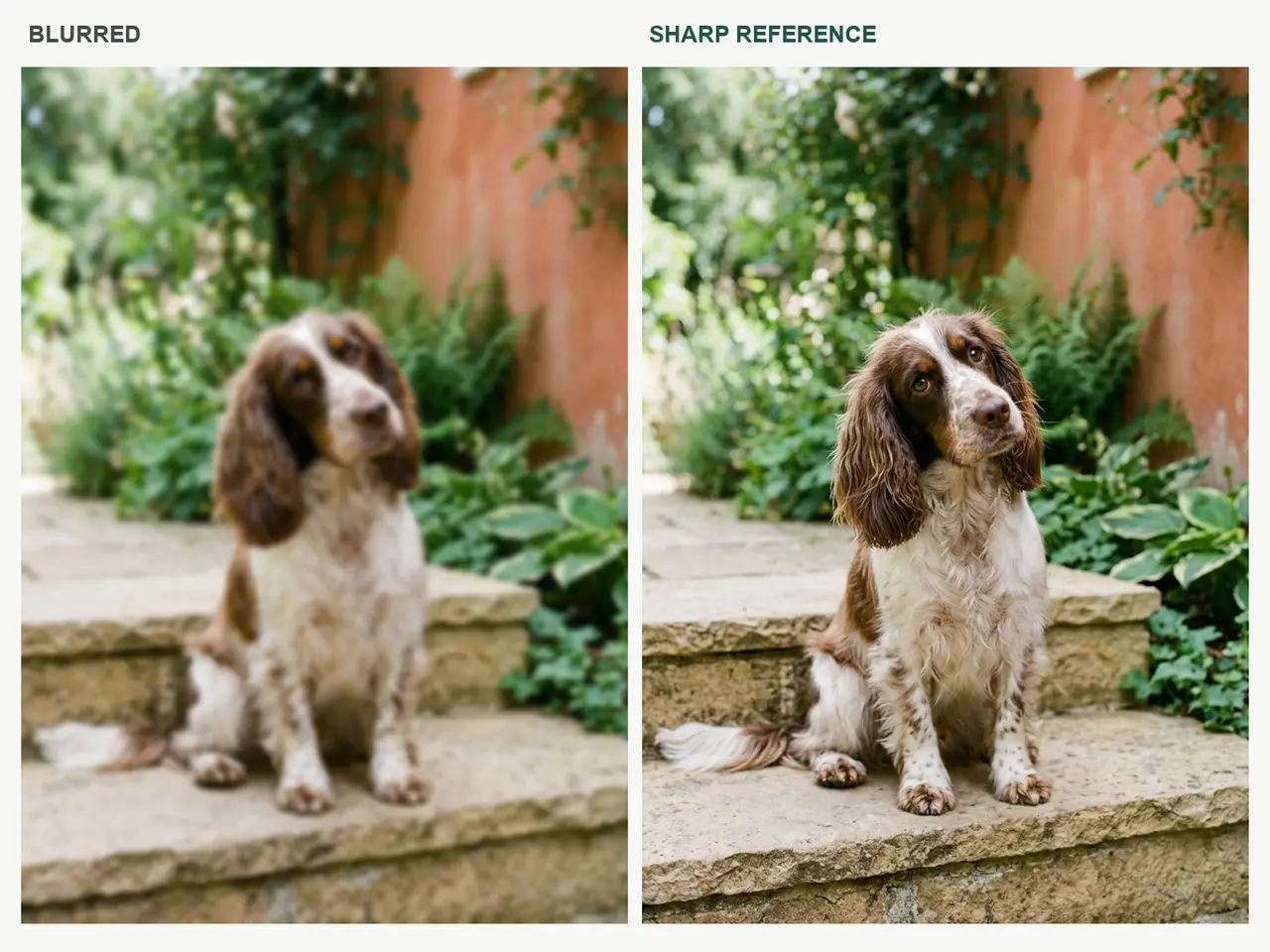 Pets
PetsImprove the clarity of my blurred reference photo while preserving the same person or object, composition and colors. Avoid invented facial details, excessive sharpening and waxy smoothing. Inspect the result against the source.
Use a Related Prompt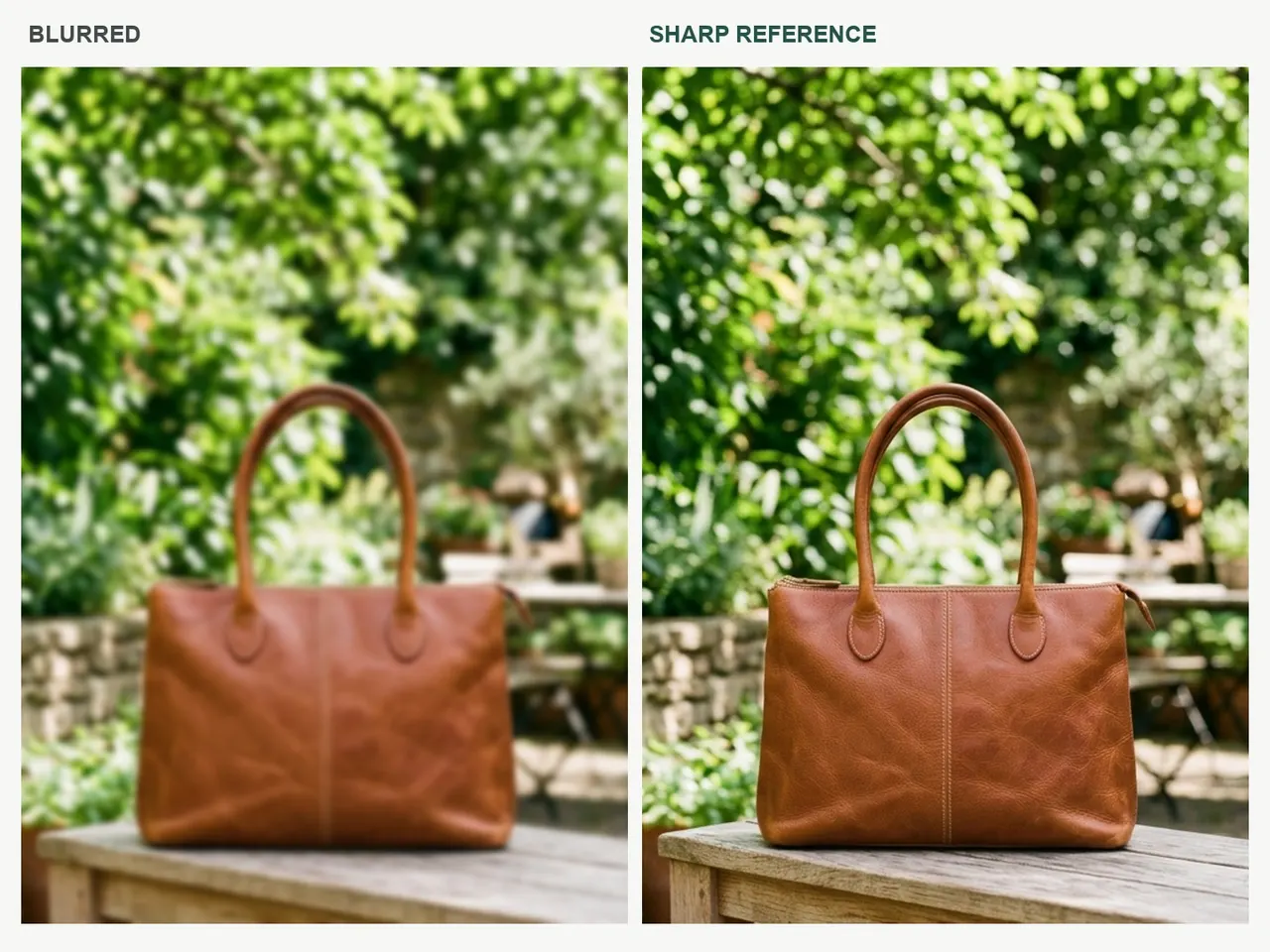 Accessories
Improve the clarity of my blurred reference photo while preserving the same person or object, composition and colors. Avoid invented facial details, excessive sharpening and waxy smoothing. Inspect the result against the source.
Use a Related Prompt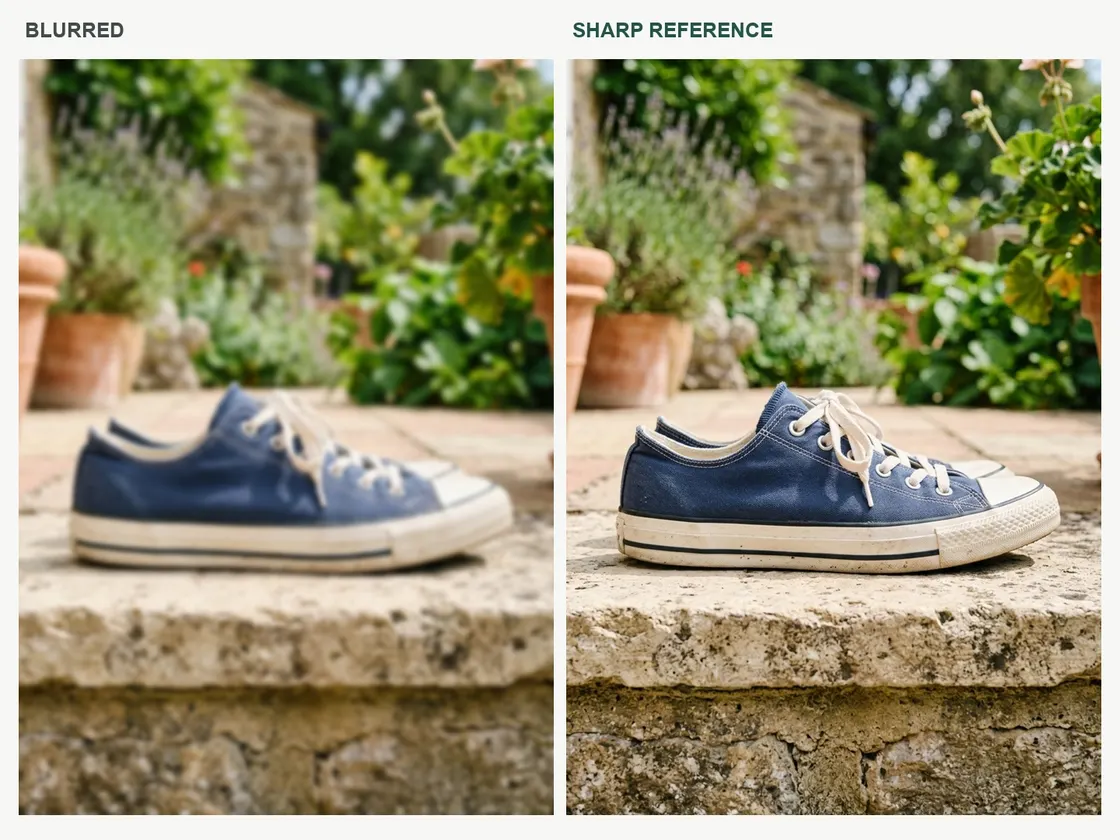 Products
Improve the clarity of my blurred reference photo while preserving the same person or object, composition and colors. Avoid invented facial details, excessive sharpening and waxy smoothing. Inspect the result against the source.
Use a Related Prompt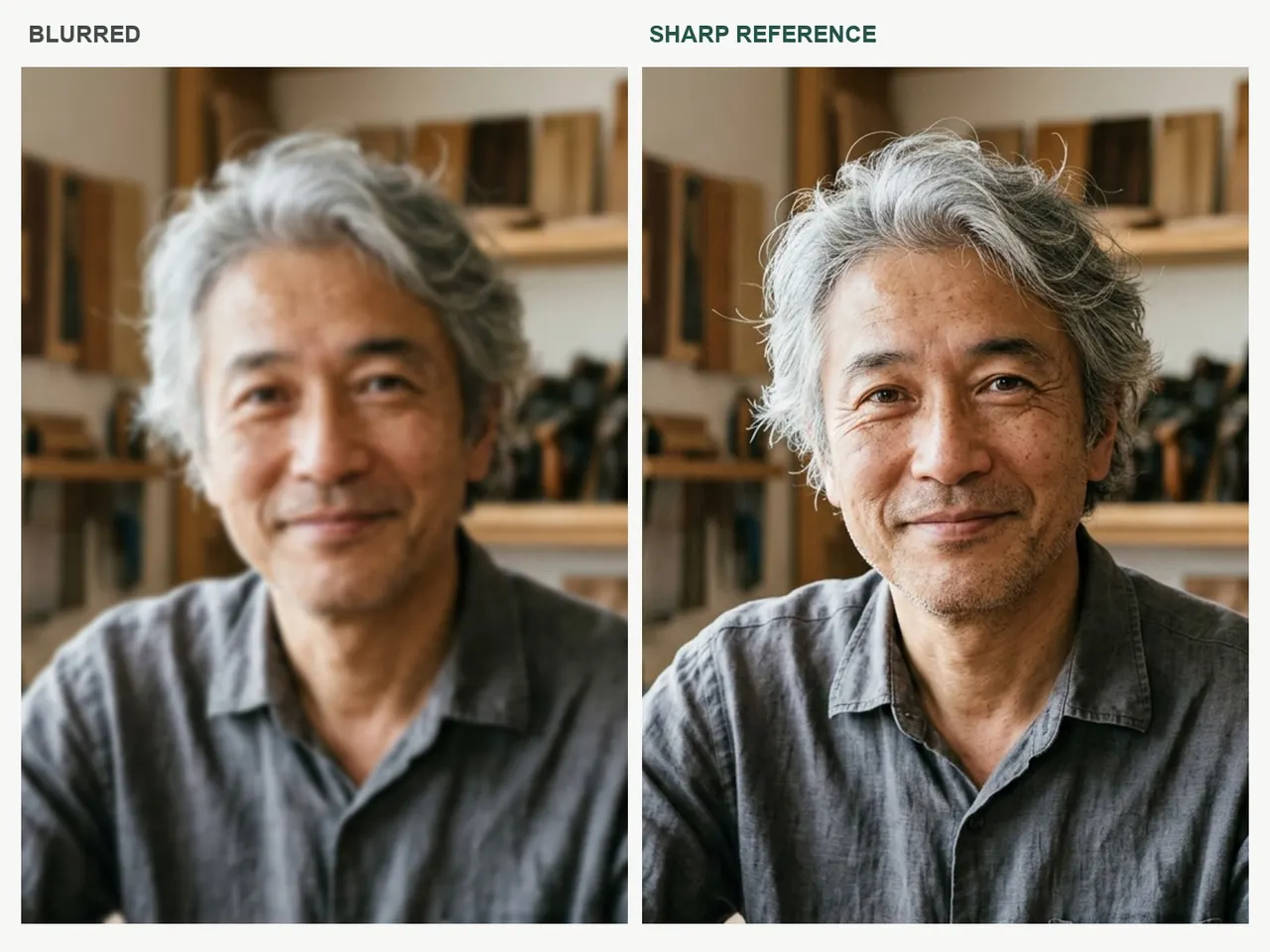 Portraits
Improve the clarity of my blurred reference photo while preserving the same person or object, composition and colors. Avoid invented facial details, excessive sharpening and waxy smoothing. Inspect the result against the source.
Use a Related Prompt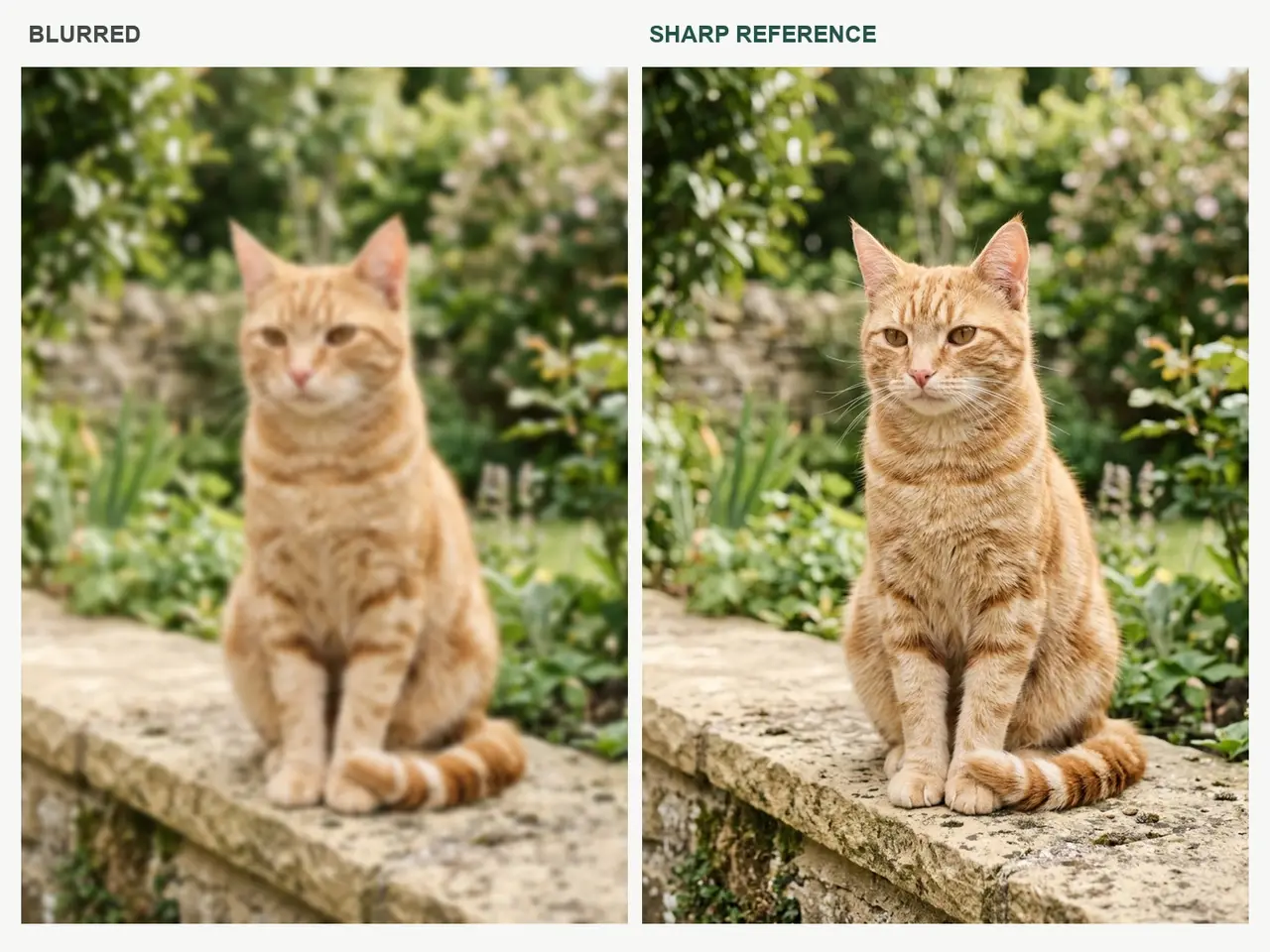 Pets
PetsImprove the clarity of my blurred reference photo while preserving the same person or object, composition and colors. Avoid invented facial details, excessive sharpening and waxy smoothing. Inspect the result against the source.
Use a Related Prompt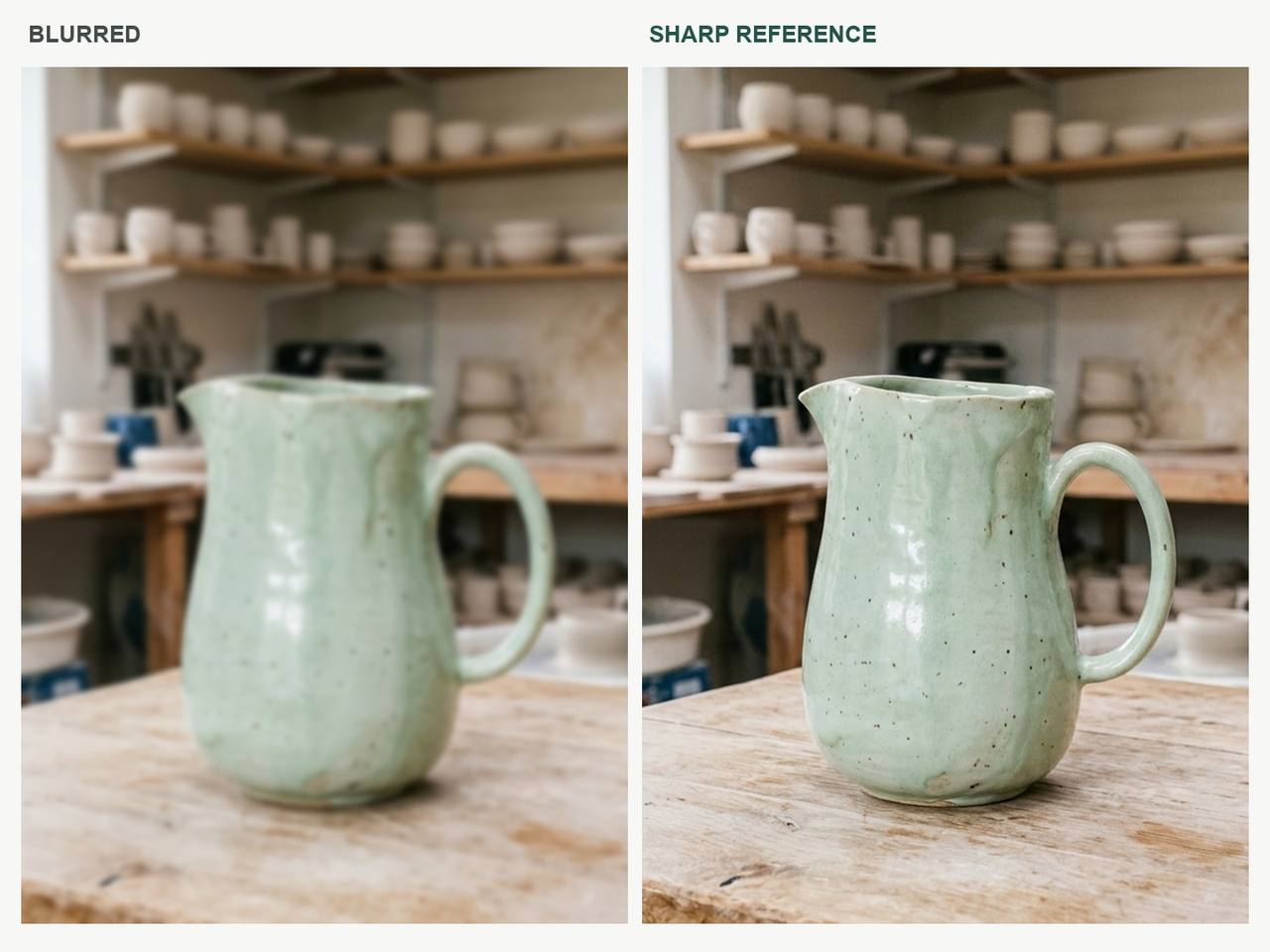 Products
Improve the clarity of my blurred reference photo while preserving the same person or object, composition and colors. Avoid invented facial details, excessive sharpening and waxy smoothing. Inspect the result against the source.
Use This DirectionProductsImprove the clarity of my blurred reference photo while preserving the same person or object, composition and colors. Avoid invented facial details, excessive sharpening and waxy smoothing. Inspect the result against the source.
Use This Direction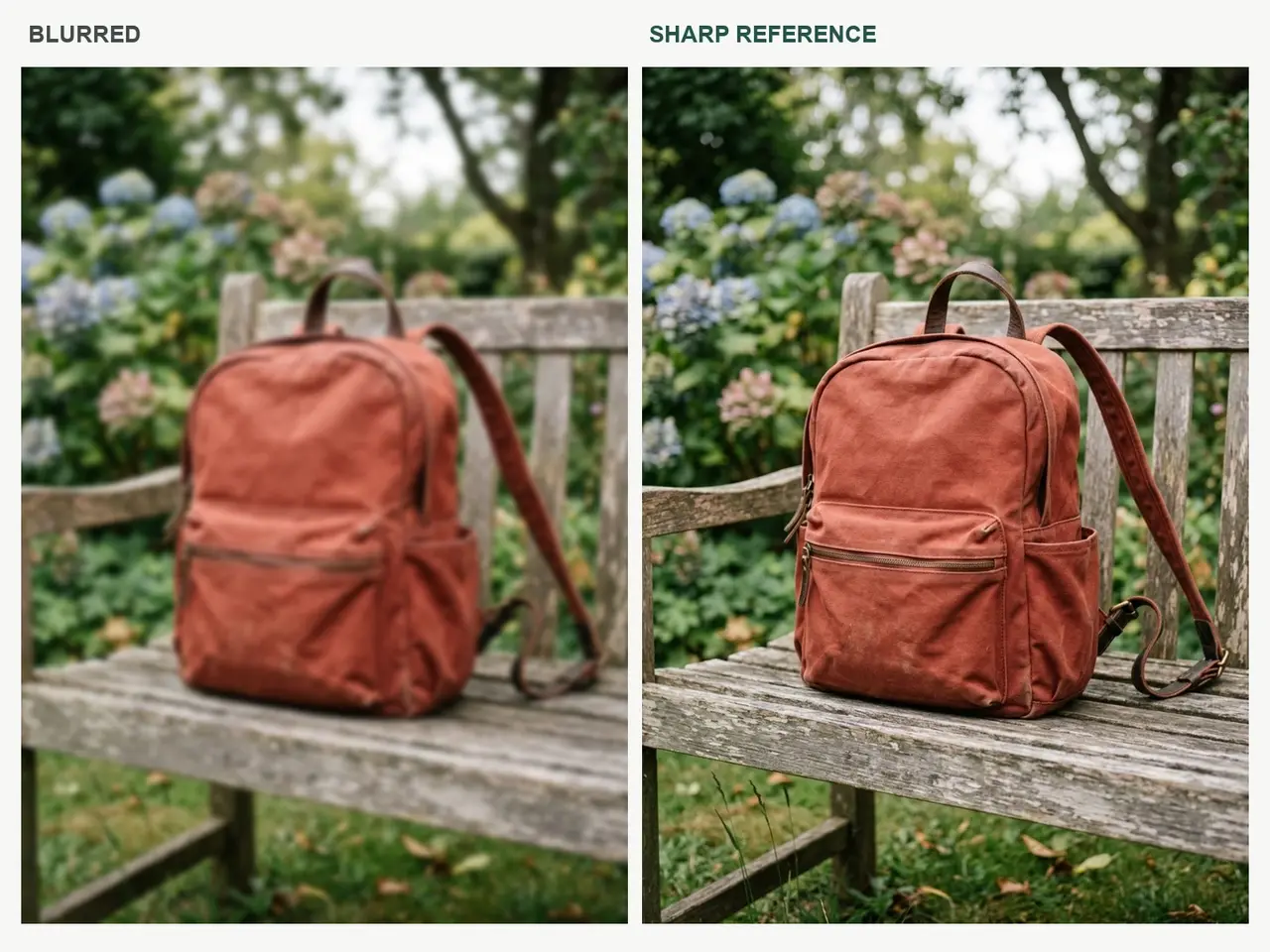 Accessories
Improve the clarity of my blurred reference photo while preserving the same person or object, composition and colors. Avoid invented facial details, excessive sharpening and waxy smoothing. Inspect the result against the source.
Use This DirectionTell the model whether the eyes, fur, architecture or product edges should receive attention.
Ask for natural pores and fine detail, avoiding plastic skin, edge halos and oversharpened backgrounds.
Compare identity, small lettering and object geometry before choosing a version for personal or professional use.
A focused brief makes each result easier to judge.
With a reference-capable model, supply the image and name the eyes, fur, lettering or edges that need attention. Ask for a restrained edit.
Choose an available model and aspect ratio. Keep the brief focused on the requested change, with clear style and lighting instructions.
Check identity, text and object shape at full size. Reject invented features, plastic texture and halos around high-contrast edges.
Fictional scenarios for review, not real customer testimonials or ratings.
Illustrative scenario: Natural portrait clarity. Tell the model whether the eyes, fur, architecture or product edges should receive attention.
Illustrative scenario: Travel scene detail. Ask for natural pores and fine detail, avoiding plastic skin, edge halos and oversharpened backgrounds.
Illustrative scenario: Pet fur detail. Compare identity, small lettering and object geometry before choosing a version for personal or professional use.
No. Missing information cannot be reliably recovered from severe blur. AI may generate plausible details that differ from the original.
Ask for identity preservation and inspect the result carefully. Eyes, teeth and skin can change, especially when the source is small or heavily blurred.
Sharpening increases local contrast around existing edges. Generative reconstruction may create new texture or shapes; it should not be treated as evidence of original detail.
Do not rely on reconstructed text for factual or identity verification. Use the original record or a better scan when accuracy matters.
Start with a clear source when possible, request subtle enhancement, and check at full size for halos, repeated textures and changed details.