

Separate what stays from what changes
Name the subject and composition to preserve, then describe the new materials, palette or setting.
Prompt Guide
Model
Reference Image
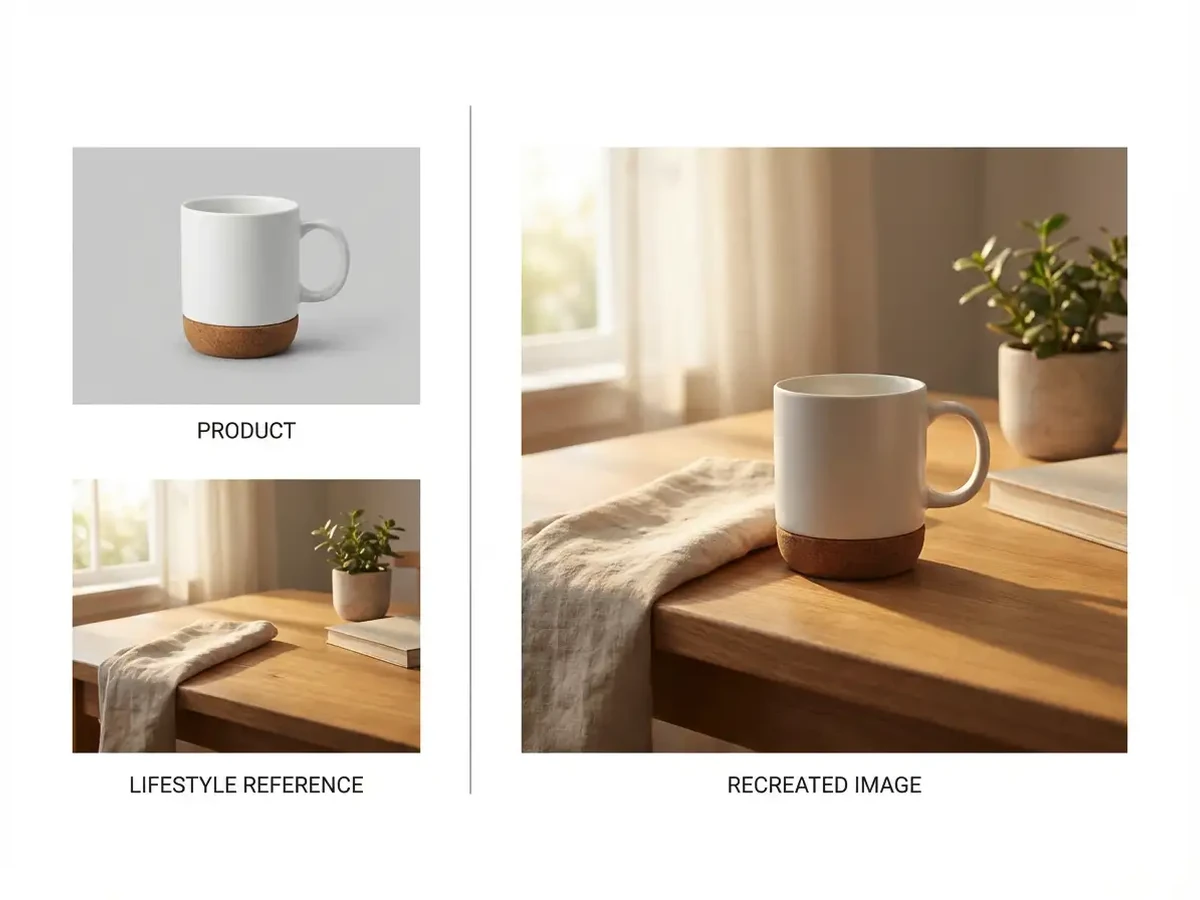
Use a reference you own to explore a new style, setting or composition. Tell the model which details matter and which may change, then compare interpretations for artwork, product scenes and personal creative projects.
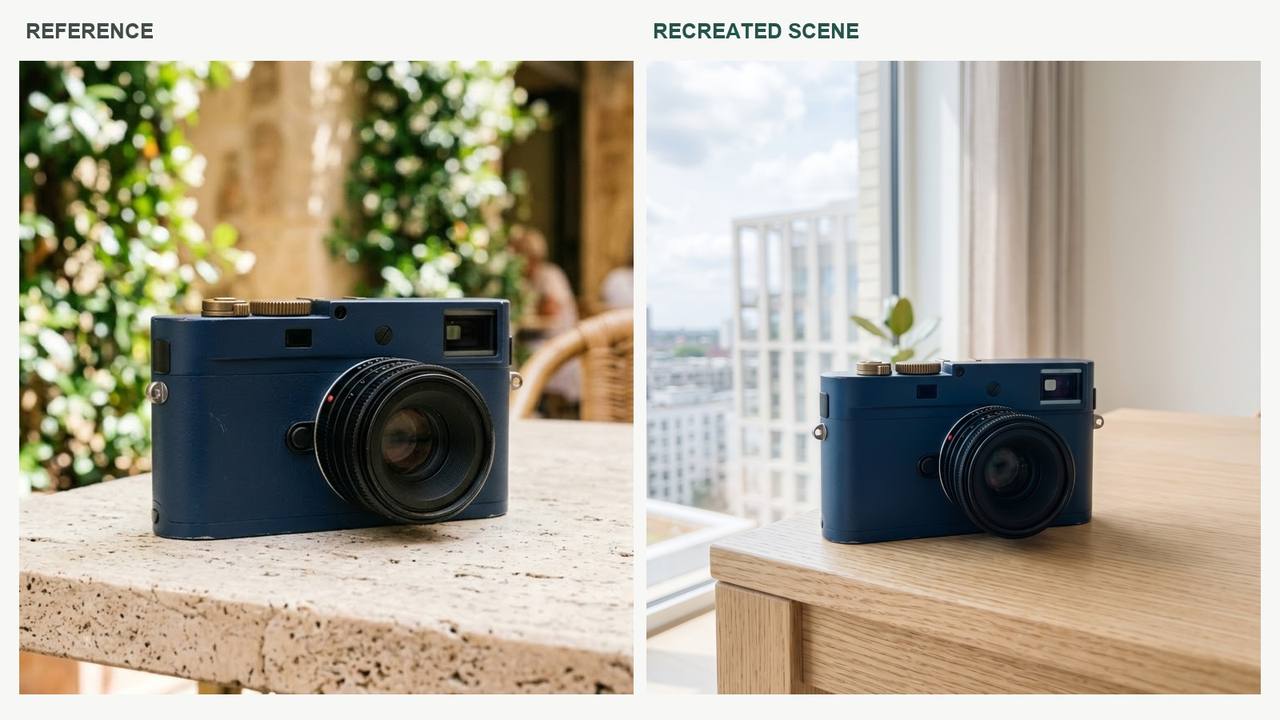
Attached-reference edits and selected original examples show what stays recognizable and what changes. These are creative examples, not exact reproduction guarantees.
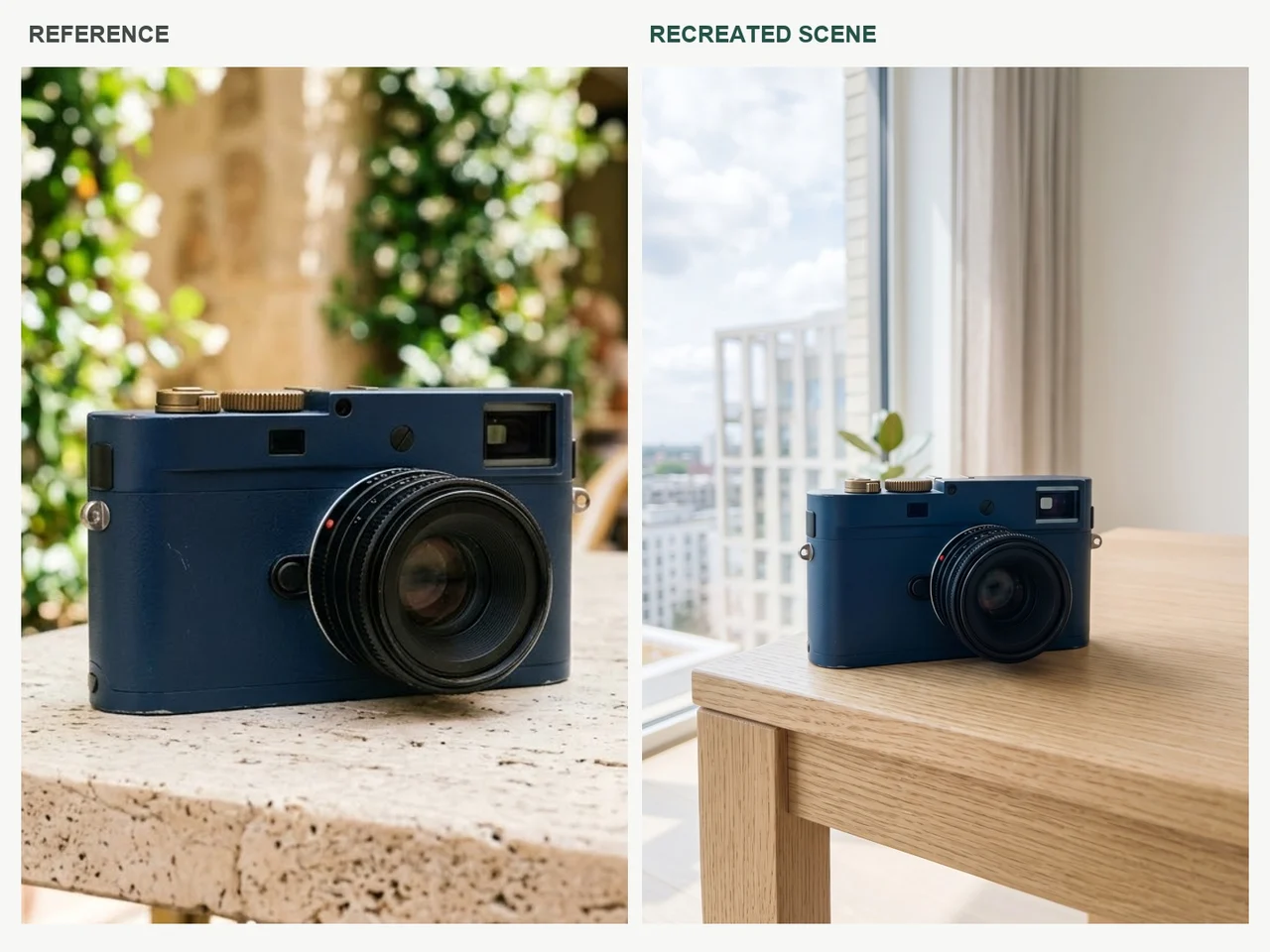 Products
Use the supplied reference as the precise subject reference. Recreate the same camera study as a polished natural photograph in a new airy setting: a light oak side table in a sunlit modern apartment. Preserve the subject identity, distinctive shape, colors and proportions. Show exactly one subject in the same orientation, with natural details and believable soft daytime light. No extra objects, text, logos, watermarks or comparison panels.
Use a Related Prompt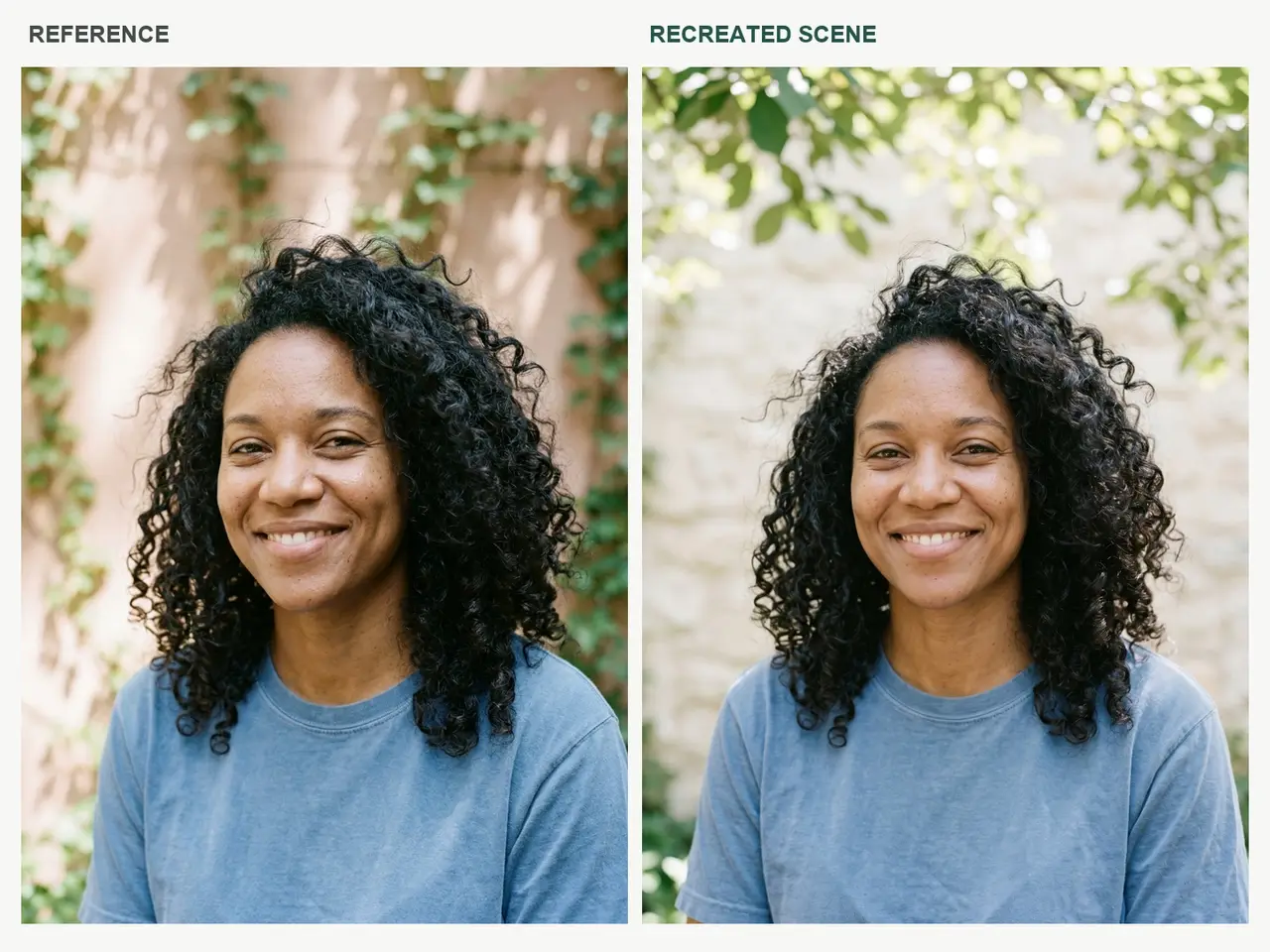 Portraits
Use the supplied reference as the precise subject reference. Recreate the same portrait study as a polished natural photograph in a new airy setting: a quiet leafy garden with a pale limestone wall. Preserve the subject identity, distinctive shape, colors and proportions. Show exactly one subject in the same orientation, with natural details and believable soft daytime light. No extra objects, text, logos, watermarks or comparison panels.
Use a Related Prompt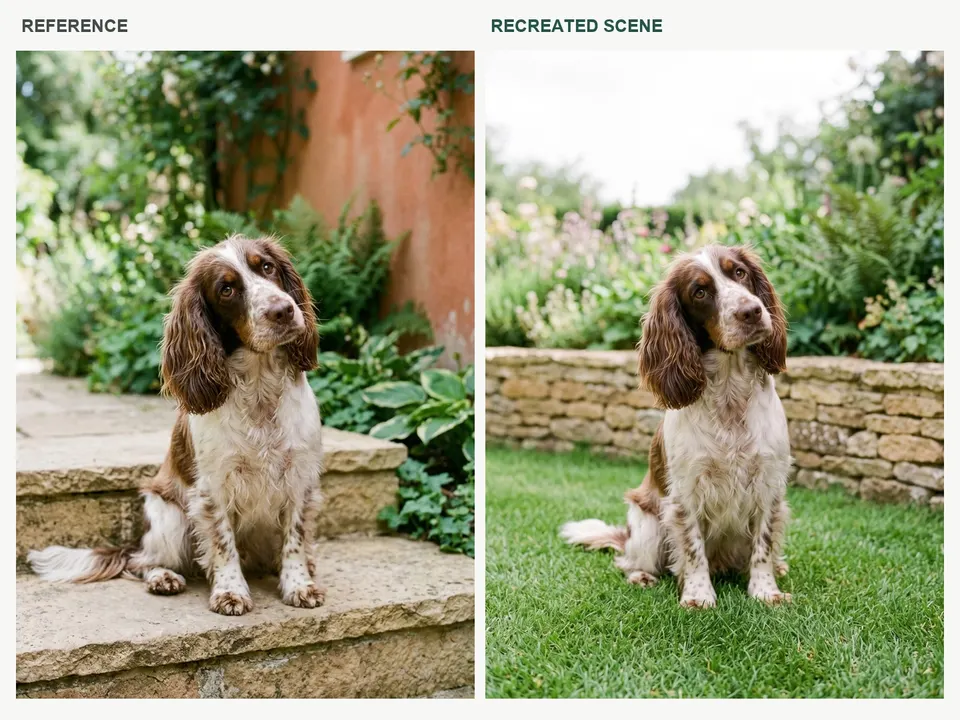 Animals
Use the supplied reference as the precise subject reference. Recreate the same spaniel study as a polished natural photograph in a new airy setting: a green garden lawn beside a low stone wall. Preserve the subject identity, distinctive shape, colors and proportions. Show exactly one subject in the same orientation, with natural details and believable soft daytime light. No extra objects, text, logos, watermarks or comparison panels.
Use a Related Prompt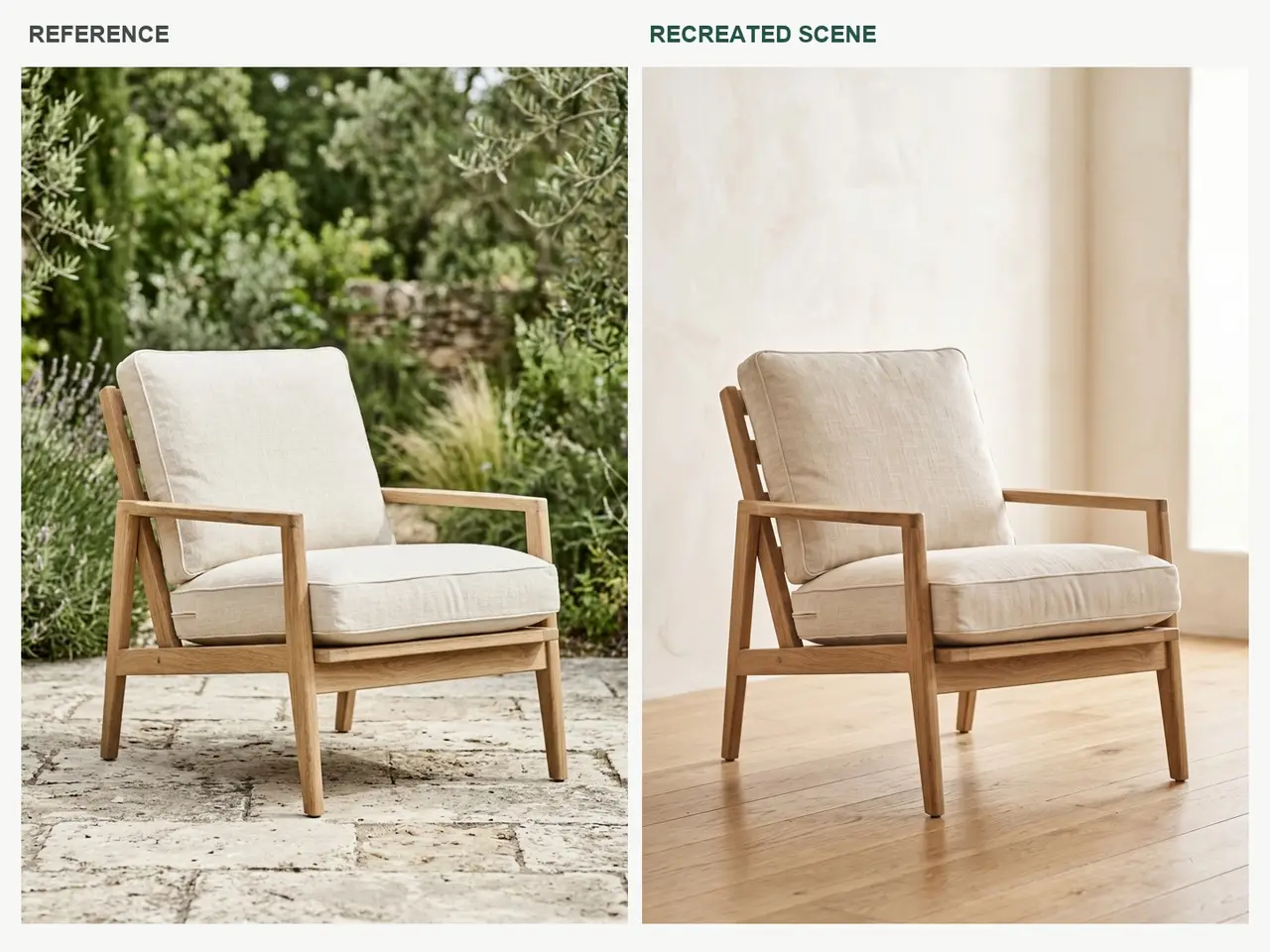 Furniture
Use the supplied reference as the precise subject reference. Recreate the same chair study as a polished natural photograph in a new airy setting: a bright design studio with warm limewashed walls. Preserve the subject identity, distinctive shape, colors and proportions. Show exactly one subject in the same orientation, with natural details and believable soft daytime light. No extra objects, text, logos, watermarks or comparison panels.
Use a Related Prompt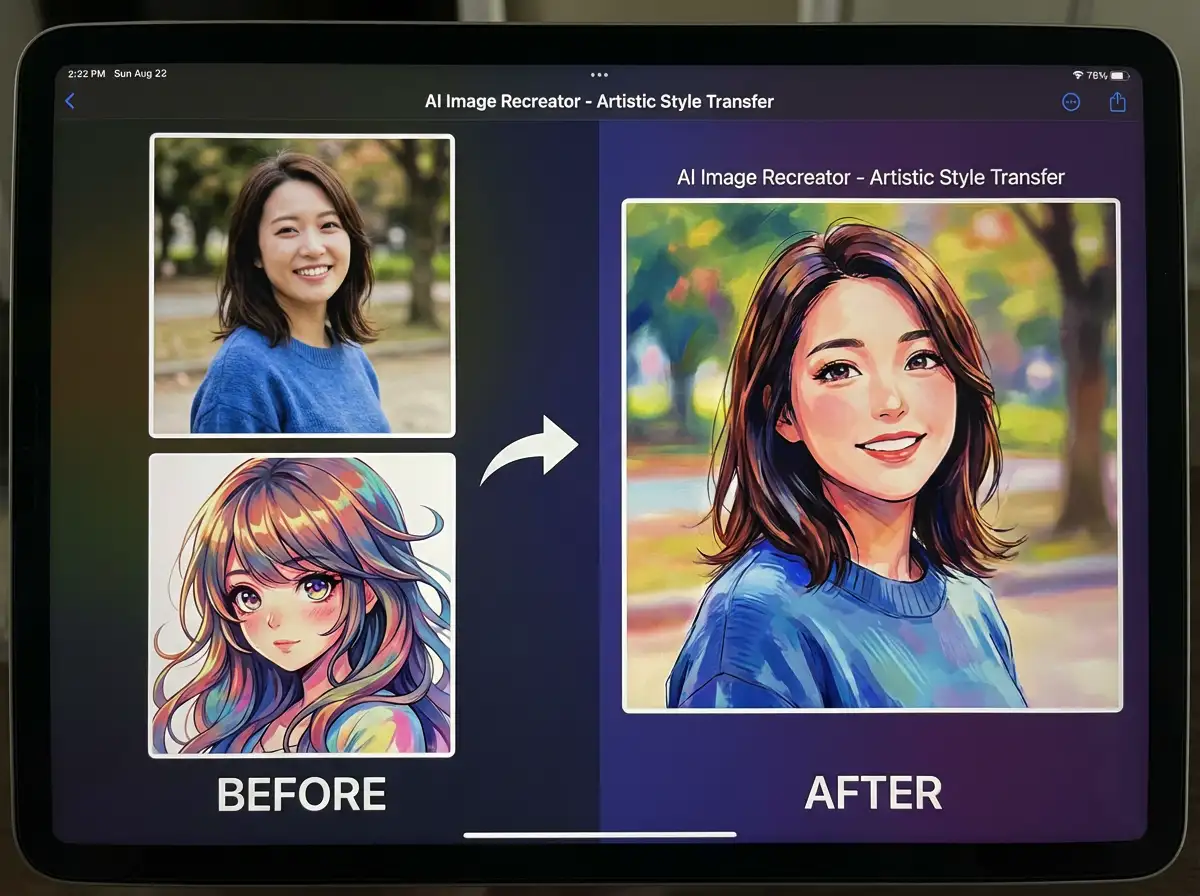 Portraits
Create an image inspired by portrait to illustration. Preserve the intended subject and style, with coherent proportions and a clean composition. Use the attached reference when provided.
Use a Related Prompt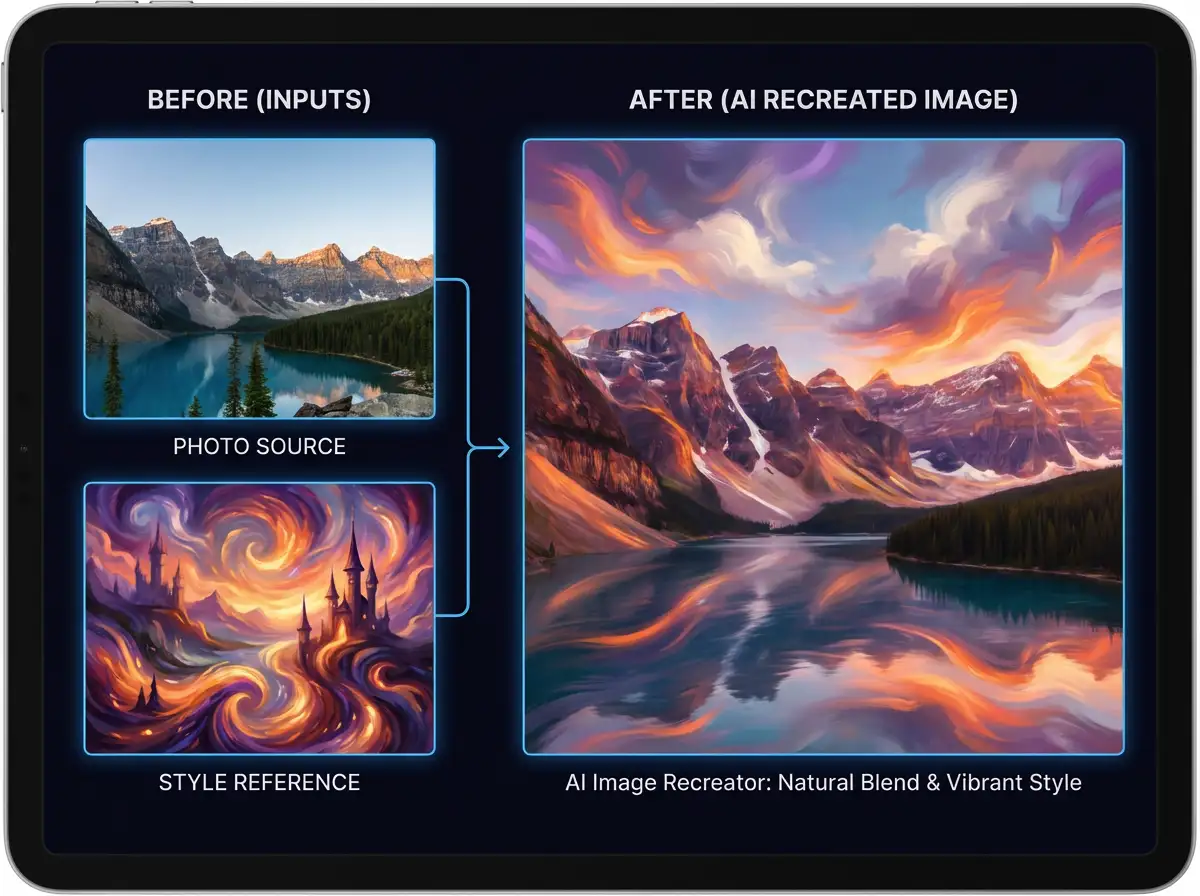 Landscapes
Create an image inspired by landscape style reference. Preserve the intended subject and style, with coherent proportions and a clean composition. Use the attached reference when provided.
Use a Related Prompt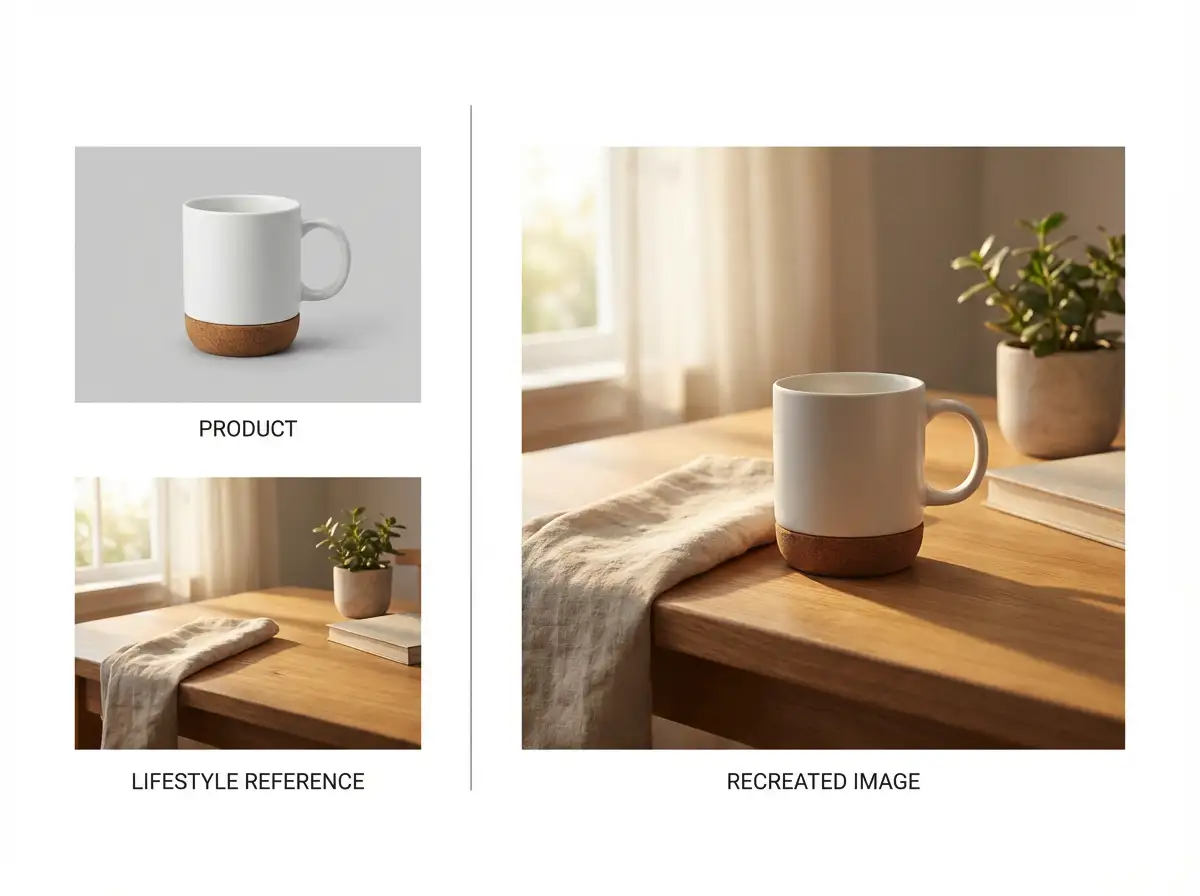 Products
Create an image inspired by product in a new setting. Preserve the intended subject and style, with coherent proportions and a clean composition. Use the attached reference when provided.
Use a Related Prompt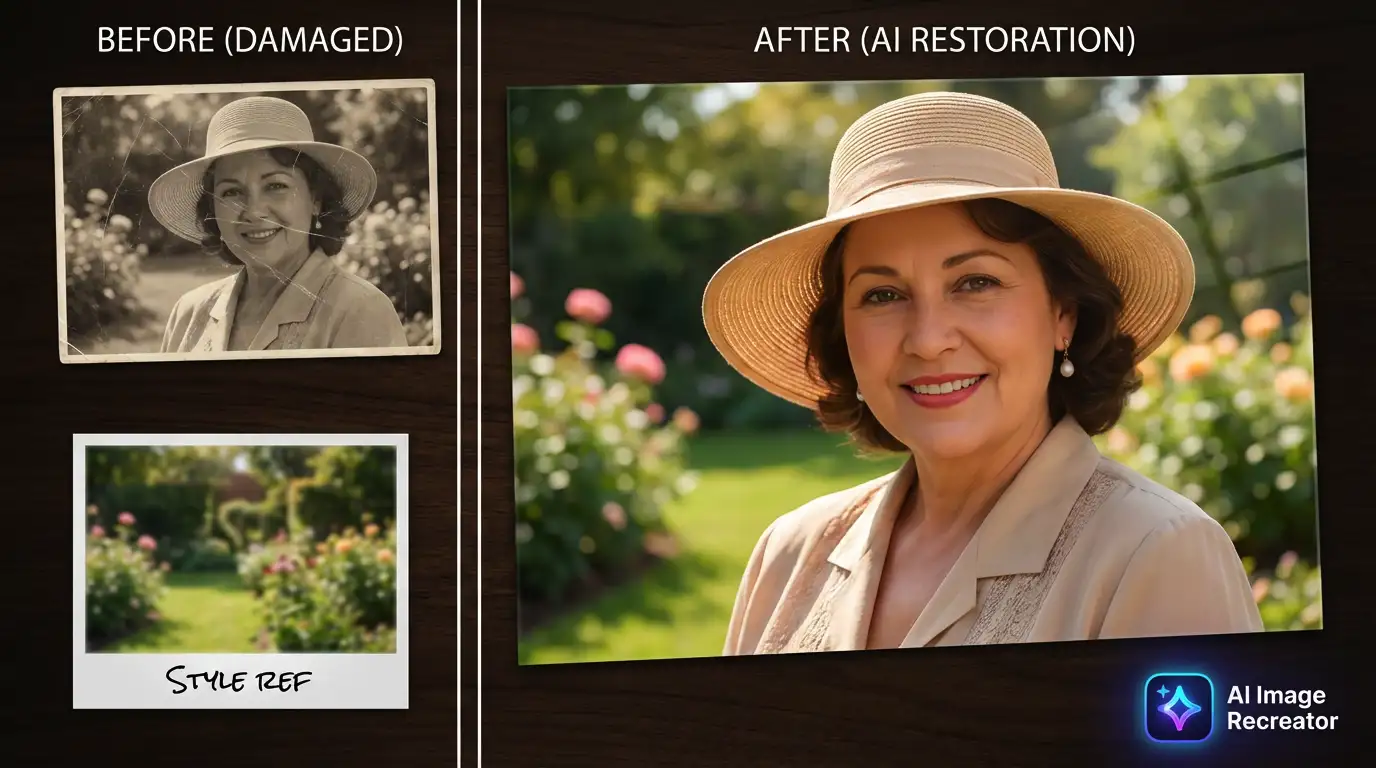 Portraits
Create an image inspired by vintage portrait reinterpretation. Preserve the intended subject and style, with coherent proportions and a clean composition. Use the attached reference when provided.
Use a Related Prompt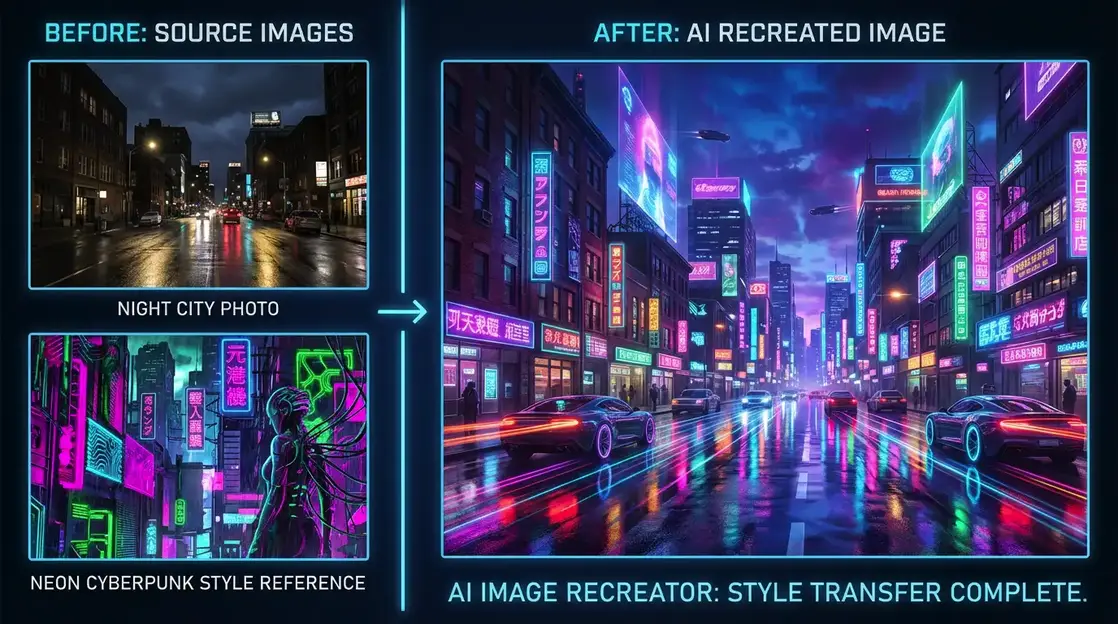 City Scenes
Create an image inspired by city style reinterpretation. Preserve the intended subject and style, with coherent proportions and a clean composition. Use the attached reference when provided.
Use a Related Prompt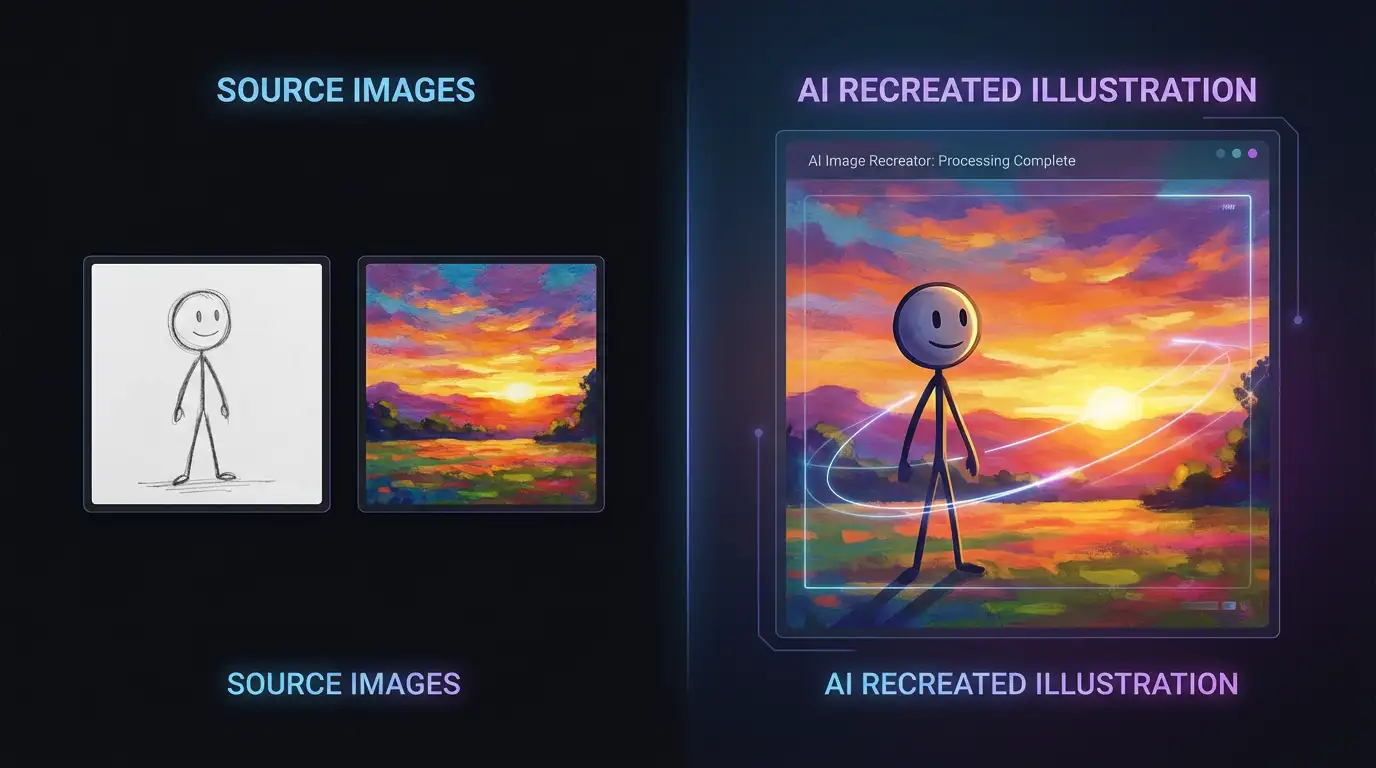 Illustration
Create an image inspired by simple sketch and color reference. Preserve the intended subject and style, with coherent proportions and a clean composition. Use the attached reference when provided.
Use a Related PromptName the subject and composition to preserve, then describe the new materials, palette or setting.
Change one visual dimension at a time so the results remain easy to compare.
Keep the same reference brief when comparing available models and choose the interpretation that best fits your project.
A focused brief makes each result easier to judge.
Use a permitted reference with a model that supports images. List the subject, layout and colors to retain, followed by the new style or setting.
Choose an available model and aspect ratio. Keep the brief focused on the requested change, with clear style and lighting instructions.
Check which source details survived. Change one instruction at a time; use a precise editor when the original must remain pixel-for-pixel unchanged.
Fictional scenarios for review, not real customer testimonials or ratings.
Illustrative scenario: Portrait to illustration. Name the subject and composition to preserve, then describe the new materials, palette or setting.
Illustrative scenario: Landscape reinterpretation. Change one visual dimension at a time so the results remain easy to compare.
Illustrative scenario: Product in a new setting. Keep the same reference brief when comparing available models and choose the interpretation that best fits your project.
No. Generative recreation produces a new interpretation and may change details. Use conventional editing when exact pixel preservation is required.
List the subject, pose or layout you want to keep, then name the style, palette or background that may change.
Input support depends on the selected model and current controls. Do not assume every model accepts multiple images or separates composition and style references.
Use material you own, have permission to use, or can lawfully adapt. An AI recreation does not remove the need to consider the source rights.
Check composition, important identifying details, unwanted text and artifacts. Choose the version that follows your intended changes rather than simply the most dramatic one.